
Void Filling & Soil Stabilization in Fall River, MA
Request Soil Void Analysis
Submit your site symptoms for dynamic cone penetrometer mapping in Fall River.
Subterranean Void Mechanics in Coastal Bristol County
A settled, cracked concrete panel is merely the visible outcome of an underground geological breakdown. Beneath every driveway, sidewalk, commercial floor, and pool apron across Fall River, Somerset, Swansea, and Westport sits a dynamic layer of soil that is constantly stressed by moisture migration, extreme temperature shifts, and uncompacted aggregate fill.
The regional soil profile of Fall River is composed heavily of dense glacial till overlaid by fine silt, sandy loam, and localized pockets of heavy coastal marine clay near Mount Hope Bay and the Taunton River basin. While dense clay appears sturdy when dry, it exhibits severe volumetric instability under New England weather extremes.
Heavy rain runoff from downspouts and hillside slopes scours fine soil grains out from under exterior concrete slabs, creating hollow subterranean caverns.
Over 100 annual freeze-thaw cycles create subterranean ice lenses that heave concrete upward, followed by soup-like collapse and void formation during spring thaws.
When water infiltrates unsealed control joints or flows along foundation margins, it dissolves and sweeps away fine particulates. This leaves irregular voids varying from half an inch to over twelve inches deep. When dynamic traffic—whether family pickup trucks or warehouse forklifts—rolls across the surface, the unsupported concrete bends in tension and shears violently along stress fractures.
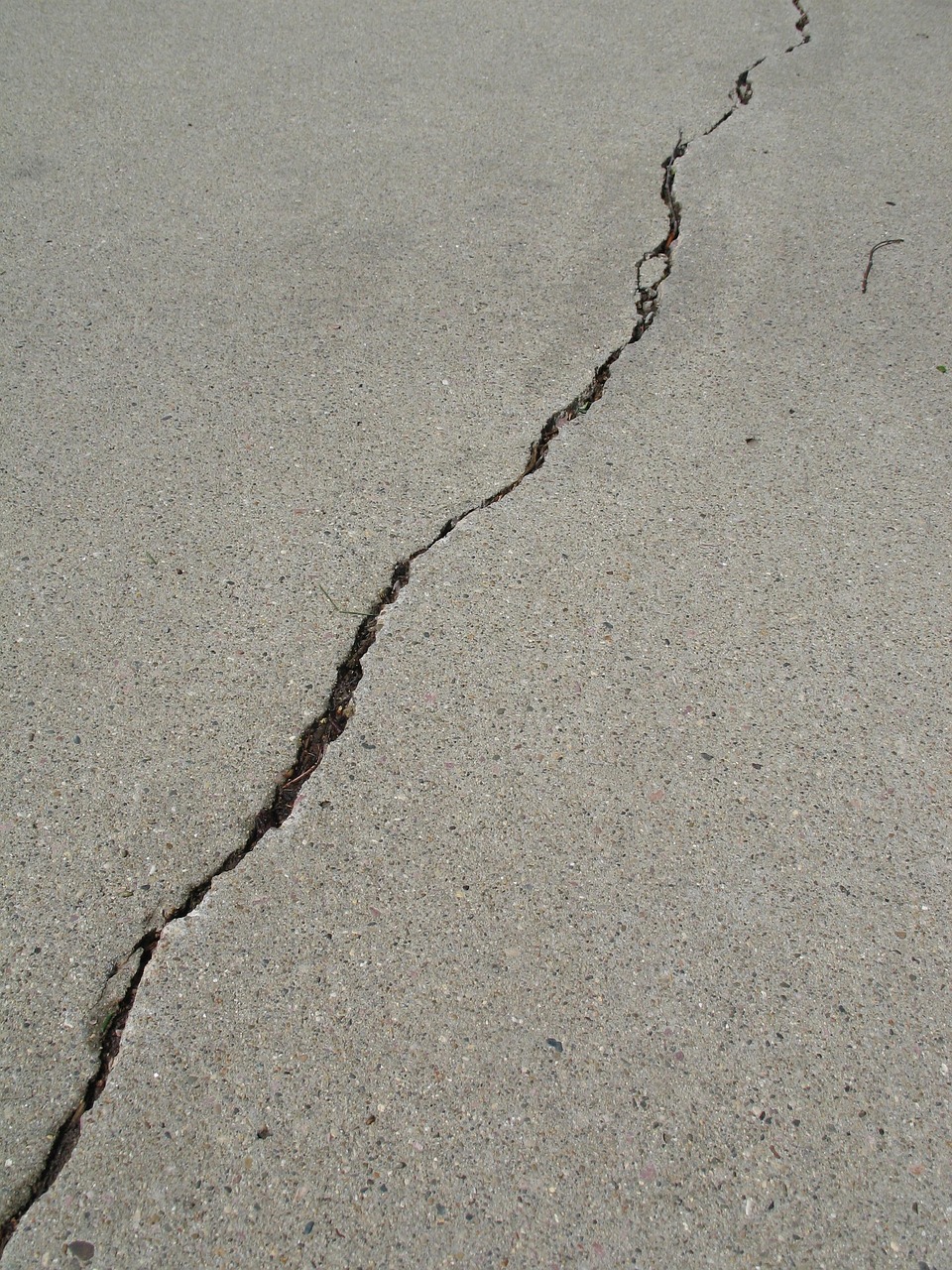
Subterranean Void & Soil Consolidation
Without continuous subgrade compaction, dynamic surface loads induce severe tension shear. Hydrophobic polyurethane foam permeates loose granular layers, solidifying the base to 100+ PSI compressive strength before cracks propagate further.
Dynamic Cone Penetrometer (DCP) Subgrade Soil Mapping
Pumping lifting material into a slab without mapping the underlying soil condition is irresponsible. If loose, unconsolidated dirt extends three feet beneath the concrete, surface lifting alone will fail within months as the deep strata compresses under subsequent traffic.
Dynamic Cone Penetrometer (DCP) Profiling
We drive calibrated steel rods into the subgrade, recording blows-per-inch to establish an accurate soil shear strength profile down to solid bedrock or refusal.
Acoustic Frequency Sounding
Trained technicians utilize acoustic resonance rods across the slab to map hollow void boundaries, identifying hidden channels before surface failure occurs.
Hydrostatic Ingress Tracing
We trace active groundwater paths, negative grade slopes, and roof runoff funnels to locate the exact entry vectors responsible for ongoing soil scouring.
Deep Strata Soil Grouting vs. Shallow Sub-Slab Void Filling
Depending on the depth of the geotechnical failure, our field technicians deploy two distinct chemical delivery methods:
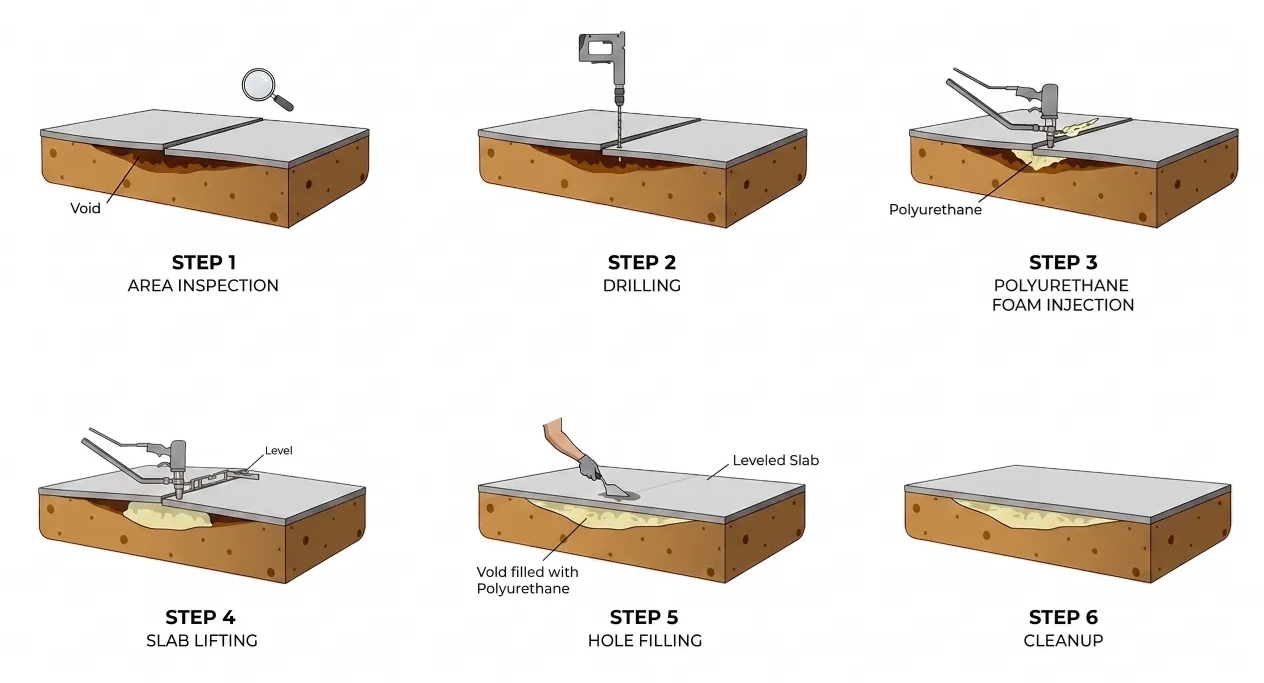
Method 1: Shallow Sub-Slab Void Filling (0 - 18 Inches)
Used when the soil base is firm but localized washout or shrinkage has opened a 1-to-4-inch air gap directly under the concrete. We install mechanical expanding packers through 5/8-inch ports and inject high-density plural-component polyurethane directly beneath the slab bottom. The liquid resin expands within 10 to 15 seconds, traveling horizontally through all open channels to create a solid, continuous support matrix that supports the entire slab.
Method 2: Deep Strata Probe Permeation Grouting (2 - 6+ Feet)
When DCP testing reveals deep, unconsolidated backfill strata, shallow injection is insufficient. We drive heavy-wall 1/2-inch steel injection pipes down into the weak subgrade layers at 2-to-5-foot depths. We then inject structural polyurethane at staggered vertical increments as the pipes are slowly retracted. The polymer permeates the loose aggregate and sand particles, gluing the loose soil grains into an impenetrable, rock-like structural conglomerate with massive load-bearing capacity.
Polymer Chemistry: Closed-Cell Hydrophobic Isolation
Traditional cement grout or mudjacking slurry fails in wet subgrades because water dilutes the cement paste before it can set, washing the material downstream.
Our structural polyurethane is engineered with a closed-cell hydrophobic formulation. During the exothermic cross-linking reaction between the A-side polymeric isocyanate and B-side polyol resin, the expanding foam physically displaces standing groundwater. It does not absorb water, does not soften in saturated soil, and does not leach toxic chemicals into local groundwater tables or Mount Hope Bay tributaries.
Permanent Moisture Barrier
Once cured, the closed-cell foam functions as an impermeable subterranean vapor barrier and moisture deflector, preventing future rain and groundwater from eroding sub-slab support soils.
Target Applications Across Fall River & Bristol County
We engineer our void filling and soil stabilization protocols for both residential structural preservation and heavy industrial facility maintenance:
Residential Foundation Perimeter & Walkways
Filling voids under front steps, wrap-around walkways, and back patio slabs along sloped Fall River and Highlands properties to stop structural tilting.
Garage & Driveway Aprons
Consolidating uncompacted backfill behind foundation stem walls to prevent vehicle tire drop and reverse pitch drainage into garage interiors.
Commercial Warehouse Floor Bays (Route 24 Corridor)
High-pressure 4.0-to-8.0 PCF polymer injection to stabilize rocking industrial joints subjected to heavy, continuous 10,000-lb forklift traffic.
Pool Decks & Retaining Wall Sub-Bases
Hydrophobic void packing behind gunite pool shells and structural retaining walls in Westport and Dartmouth without exerting destructive lateral pressure.
Zero Downtime: 15-Minute Return to Full Operational Load
Commercial facilities and homeowners cannot afford days of barricades, open trenches, or curing delays. While cementitious mudjacking and new concrete pours demand 24 to 48 hours of curing before receiving traffic, high-density polyurethane completes its exothermic reaction and reaches 90% of its ultimate compressive strength within 15 minutes of injection.
We extract our mechanical packers, seal the 5/8-inch penny ports with heavy-duty polymer-modified cement grout, clean the work area, and return your concrete surface to full, unrestricted vehicular or foot traffic before our trailer leaves your driveway.
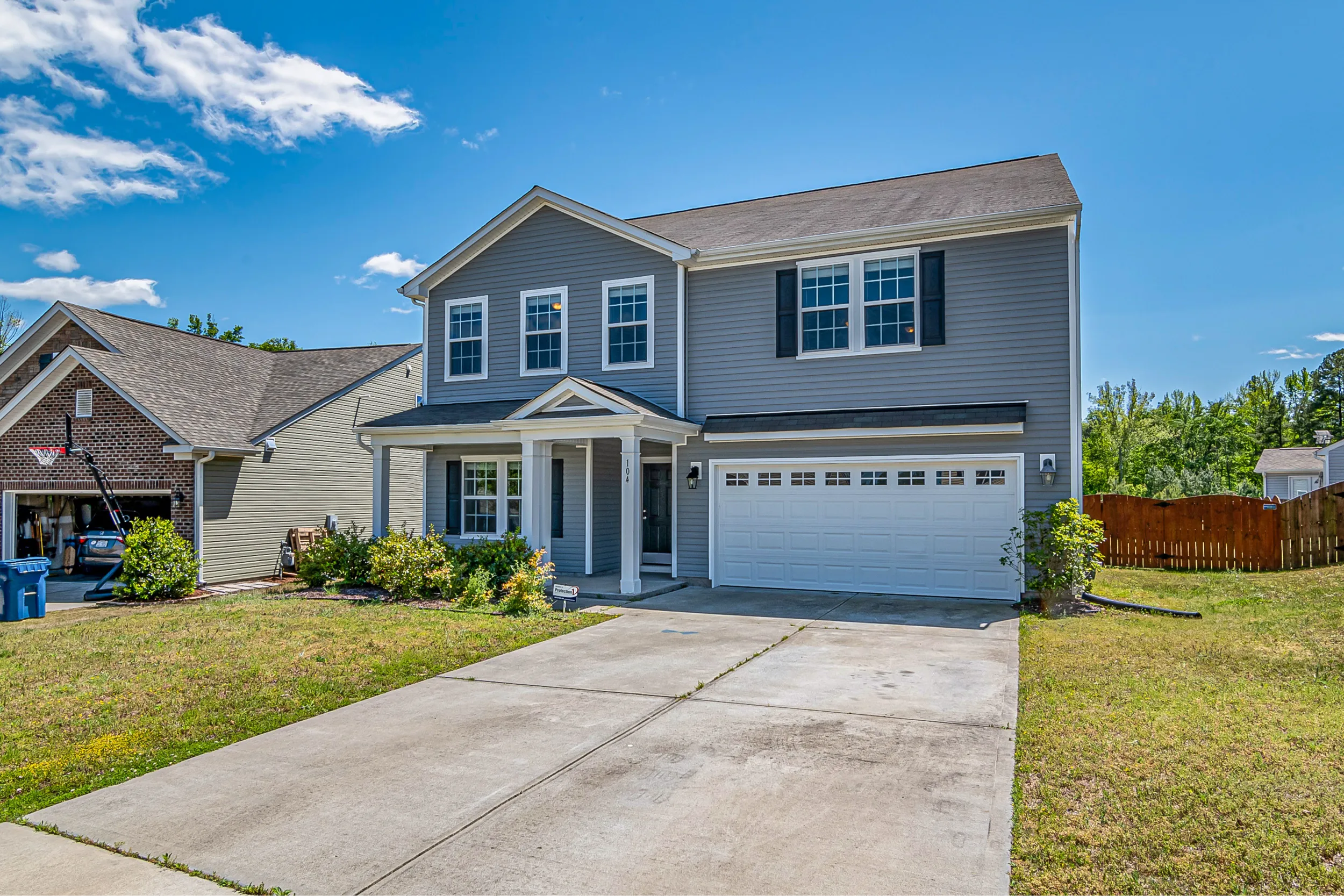
Stop Underground Washouts & Sinking Concrete
Serving Fall River, Somerset, Swansea, Westport, Dartmouth, and Bristol County. High-density void stabilization with 15-minute cure times.