
Garage Floor Leveling Fall River MA
Get Garage Slab Quote
Direct geotechnical pricing for Fall River, Somerset, Swansea, and Westport properties.
The Mechanics of Garage Slab Settlement in Fall River
When a 5,000-pound truck rolls into a residential garage, its entire gravitational mass is focused onto four contact patches measuring approximately 30 square inches each. If the soil supporting the four-to-six-inch concrete slab has settled, the slab transforms into an unsupported structural bridge. The bottom tension zone of the concrete exceeds its tensile modulus of rupture (typically 400 to 500 PSI for unreinforced residential mixes), creating longitudinal center cracks and severe step-down faulting along the perimeter stem wall.
In Fall River, garage floor failure follows a consistent geotechnical pattern. During original residential development across neighborhoods in The Highlands, Flint Village, and the North End along North Main Street, builders excavated deep footings below the regional 48-inch frost depth. After pouring the concrete foundation stem walls, the internal 20x20 or 24x24 foot bay was backfilled with unwashed pit-run gravel, jobsite spoil, and clay loam.
This backfill was almost never consolidated in mechanical six-inch lifts with pneumatic vibratory compactors. Instead, concrete contractors poured flatwork directly across loose, aerated dirt. Over 15 to 40 years, vehicle vibrations, water migration from coastal storm surges near Mount Hope Bay, and more than 100 annual freeze-thaw cycles settle the underlying aggregate, leaving a hollow air void spanning one to four inches beneath the slab.
Overhead Door Binding
As the front slab threshold sinks 1 to 2 inches, steel vertical door tracks warp out of plumb, wearing out motor openers and tearing rubber bottom seals.
Reverse Pitch Ponding
Instead of shedding melting snow and vehicle road brine out toward the driveway, settled slabs slope backward, rotting 2x4 sill framing along interior walls.
Tire Step-Down Shearing
The sharp 1-to-3-inch drop between the exterior asphalt driveway and the interior garage floor destroys tire sidewalls, suspension bushings, and creates major slip-and-trip liability.
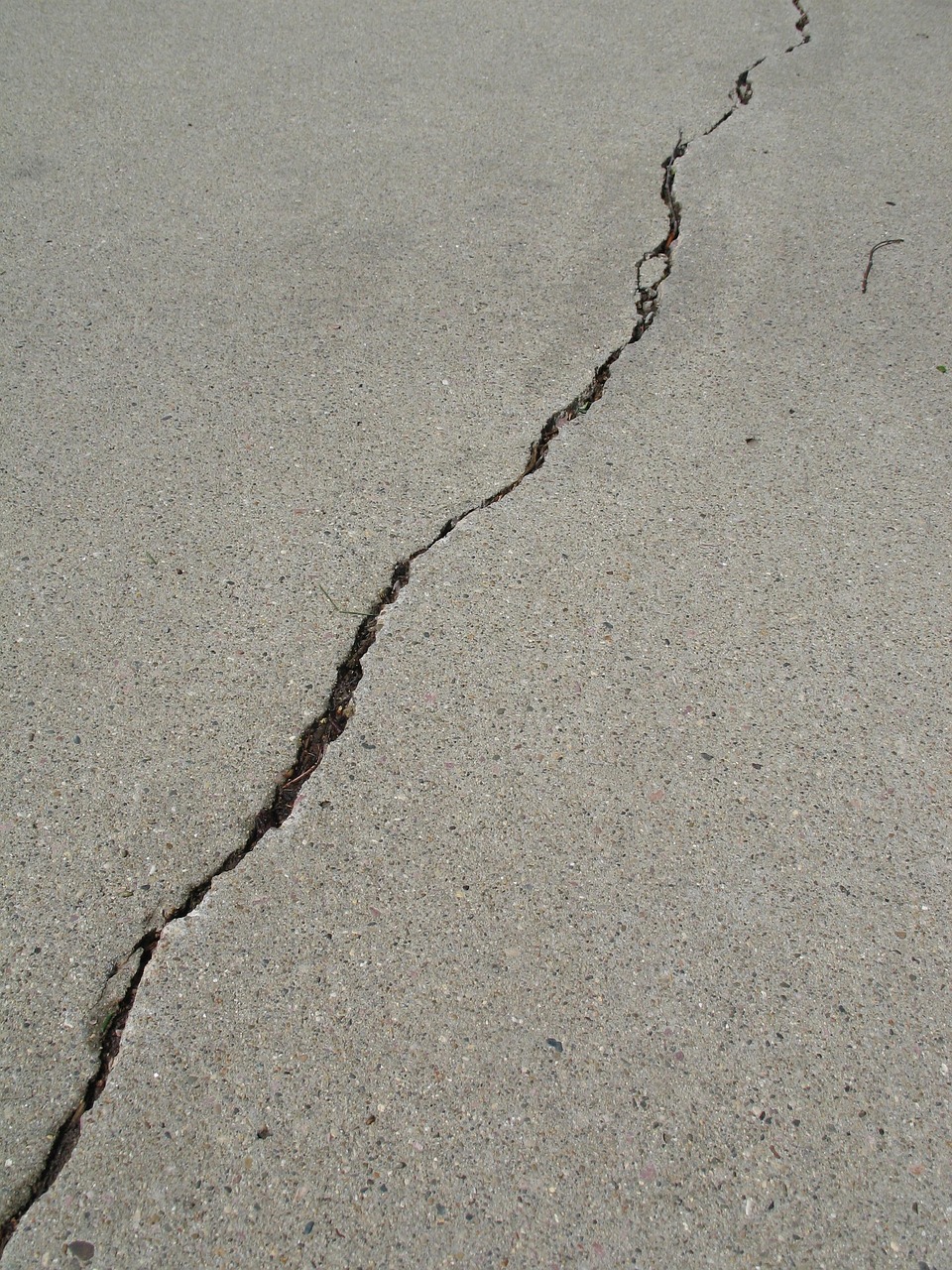
Garage Threshold & Center-Line Fracture
Heavy vehicle point-loading over hollow backfill creates tensile stress fractures along garage control lines. High-density polyurethane injection fills these deep air pockets, establishing solid foundation contact in 15 minutes.
Why Demolition and Cement Slurry Fail in Garage Bays
Property owners facing sunken garage slabs are frequently steered toward complete concrete replacement by general demolition contractors. In a confined garage bay, hydraulic breaker hammers transfer destructive shockwaves directly into surrounding foundation stem walls and structural posts. Hauling out tons of shattered concrete requires multi-ton dumpsters, and fresh concrete requires a full 28-day cure cycle before achieving design compressive strength.
Critically, pouring new concrete over the same unconsolidated sub-base does not resolve the geotechnical void. The added mass of fresh 145-lb/cu ft concrete accelerates secondary settlement, causing the new slab to sink again within five to seven years.

Traditional mudjacking is equally flawed in garage applications. Mudjacking pumps a wet slurry of quarry sand, topsoil, and Portland cement weighing 100 to 120 pounds per cubic foot. Pumping 3,000 to 5,000 pounds of heavy slurry onto saturated Bristol County clay crushes weak underlying strata. Furthermore, mudjacking requires drilling large two-to-three-inch holes through the slab, permanently weakening the structural wear surface.
| Performance Metric | High-Density Polyjacking | Mudjacking Slurry | Full Slab Tear-Out |
|---|---|---|---|
| Weight Surcharge on Dirt | 2.0 - 4.0 lbs/cu ft (Negligible) | 100 - 120 lbs/cu ft (Heavy) | 145 lbs/cu ft (Extreme Load) |
| Port Hole Diameter | 5/8" Penny Ports (Clean Finish) | 2.0" - 3.0" Large Cores | Full Structural Demolition |
| Vehicle Drive-On Time | 15 Minutes Flat | 24 to 48 Hours | 28 Days Full Hydraulic Cure |
| Subgrade Compaction | High Hydrostatic Expansion | None (Passive Fill) | Requires Heavy Tamp Equipment |
| Moisture Breakdown | 100% Hydrophobic Closed-Cell | Washes out / Eradicated by salt | Vulnerable to unsealed joints |
The 5-Stage Mechanical Garage Lifting Protocol
Acoustic Void Sounding & DCP Subgrade Profiling
We acoustic-map the entire floor using calibrated sounding rods and dynamic cone penetrometer (DCP) resistance testing. This locates exact void perimeters, soil compaction depths, and uncompacted aggregate channels beneath the garage slab.
Kinetic Joint Relief & Precision Port Grid Drilling
We saw-cut bound debris from perimeter control joints to release mechanical pinch points against the foundation. Using hammer drills with HEPA dust extractors, we core 5/8-inch penny-sized injection ports on a 3-to-4-foot triangular grid pattern.
Mechanical Packer Sealing & Plural Delivery
We insert brass-and-rubber mechanical injection packers into the ports. Our mobile proportioner heats A-side isocyanate and B-side polyol resin to 125°F under 1,200 PSI. The liquid chemicals mix inside the impingement chamber and enter the subgrade.
Hydro-Expansion Lifting & Continuous Laser Monitoring
The chemical reaction expands 20 times in volume in seconds, compacting loose gravel before generating controlled hydraulic lift. Digital laser receivers track elevation in 1/16-inch increments, aligning the slab perfectly with door thresholds.
Packer Extraction & High-Strength Cementitious Grouting
Packers are extracted, and injection ports are filled flush with high-early-strength polymer-modified cement grout color-matched to the concrete. Perimeter joints are sealed with polyurethane joint sealant to block water intrusion.
Target Soil & Elevation Challenges in Fall River Neighborhoods
Fall River's distinctive topography creates extreme elevation drops from the granite ridges of The Highlands down to the coastal waterline of Mount Hope Bay. Garages constructed on hillside cuts—particularly along President Avenue, Highland Avenue, and Eastern Avenue—experience steep hydrostatic gradients. Runoff flowing downslope scours fine sand and silt out from under downhill garage apron margins.
In the Flint Village and Maplewood areas, multi-family two- and three-stall detached garages frequently share common unreinforced floor slabs built over saturated glacial till. When vehicle traffic rolls across these uncompacted bases during January and February, frost lenses heave the perimeter footings while the center bays settle under vehicle weight.
Our structural polyurethane formulas achieve full load-bearing cure within 15 minutes of injection, allowing property owners to pull heavy work vans and SUVs back into the garage immediately upon completion.
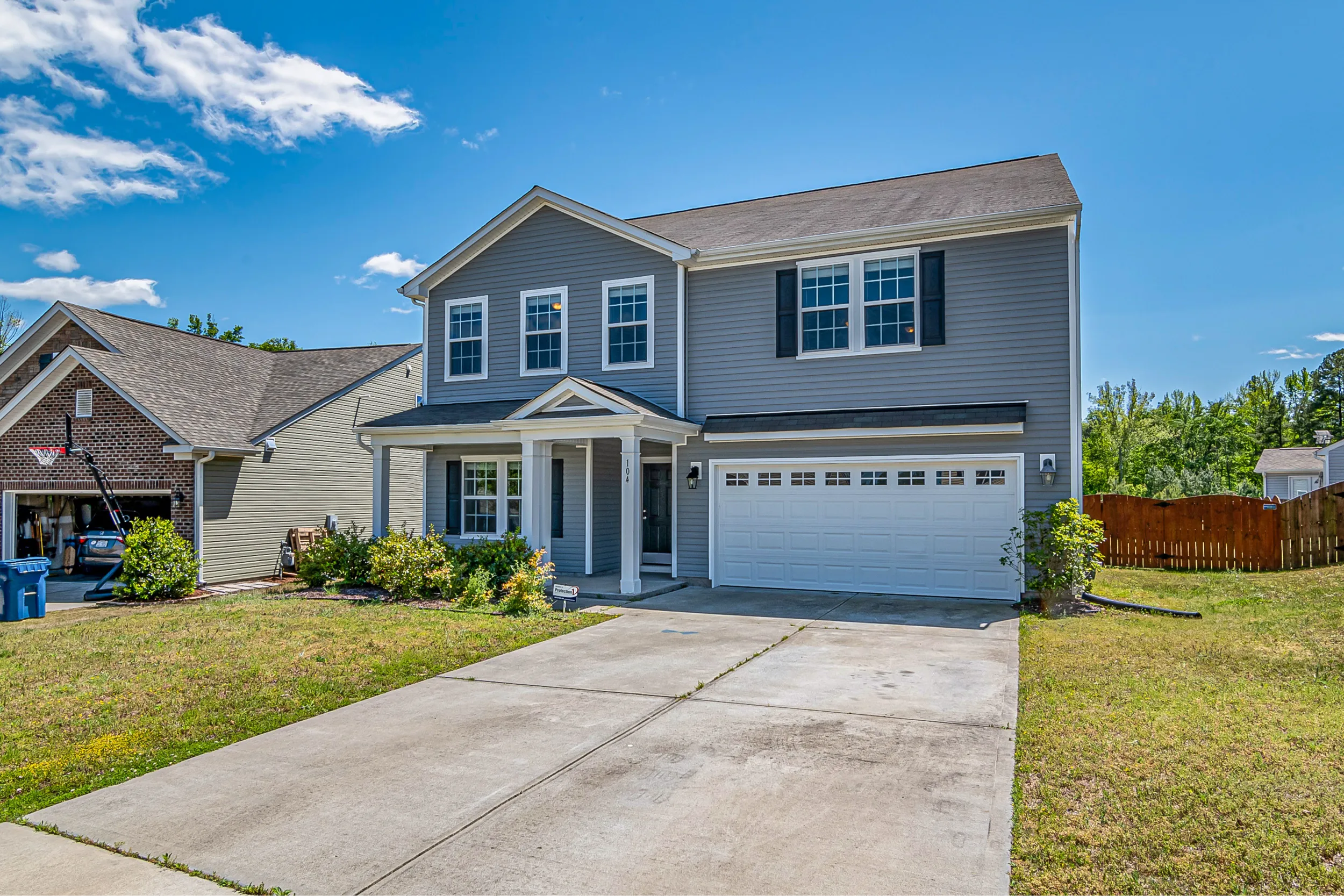
Stop Vehicle Slab Settlement Today
Serving Fall River, Somerset, Swansea, Westport, Dartmouth, and Freetown. Fast 15-minute return to vehicle service. Call for an on-site inspection & quote.