
Concrete Leveling in Freetown, MA
Get Freetown Estimate
Direct geotechnical pricing for Freetown, Assonet, and East Freetown properties.
Woodland Water Tables & Rural Soil Washout in Freetown & Assonet
Unlike densely built urban grids with concrete curbing and municipal storm sewer systems, properties in Freetown and the historic village of Assonet rely heavily on open ditch swales, sheet flow drainage, and long rural access driveways. Spanning the vast watershed from Long Pond and Assonet Bay across to the Freetown-Fall River State Forest, the local soil profile consists of coarse sand, glacial outwash gravel, and high organic loam layers over dense hardpan.
In areas along Chace Road, South Main Street in Assonet, and East Freetown near Route 140, the shallow water table sits just two to four feet beneath the surface during winter and spring. Heavy seasonal rains saturate the granular base under concrete driveways, equipment barn slabs, and residential pool decks. Without municipal curbs to contain lateral runoff, water sweeps along the edges of concrete slabs, carrying away the supportive gravel sub-base grain by grain.
When heavy pickup trucks, horse trailers, or commercial utility vehicles park on these compromised slabs, the unsupported concrete flexes across the void and breaks. In addition, Freetown's open woodland terrain experiences intense frost penetration during January and February. Water trapped beneath hollowed slabs freezes into ice lenses that heave concrete slabs upward by two inches, only to drop into a cracked, misaligned state during the spring thaw.
Tidal and river-influenced water tables cause persistent sub-base moisture saturation that undermines garage aprons and front walkways.
Coarse glacial sand layers wash out under pool decks and lakeside patios during heavy spring runoff and seasonal storm events.
Commercial logistics bays and equipment parking pads experience subgrade consolidation under heavy dynamic axle point loads.
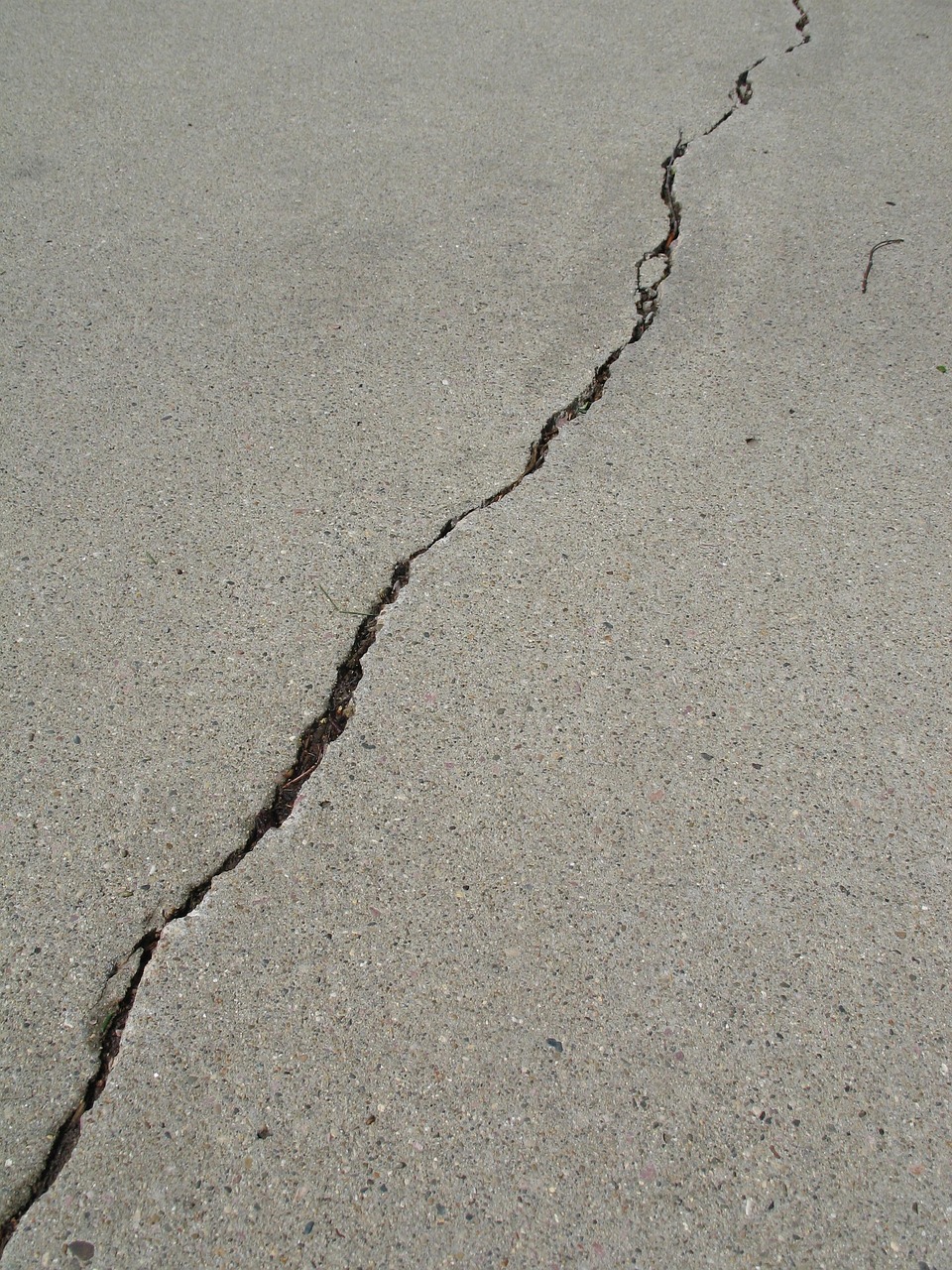
Woodland Drainage Washout & Slab Shear
Uncurbed rural runoff washes fine glacial sand from beneath long driveways and patio perimeters. Closed-cell polymer expands to fill sub-slab pockets and permanently stabilizes the subgrade against water saturation.
Why Mudjacking Fails on High-Water-Table Freetown Soil
Property owners in Freetown who attempt to fix sinking concrete with traditional mudjacking frequently experience total structural failure within one to two seasons. Mudjacking relies on pumping a hydraulic slurry of quarry sand, topsoil, and Portland cement weighing 100 to 120 pounds per cubic foot beneath the concrete.
In Freetown's sandy loam and shallow water table environment, pumping several tons of heavy wet slurry has catastrophic effects:
Mudjacking Breakdown
- • Soil Overburden: Adds 100+ lbs/cu ft of dead weight, compressing wet sand and causing slabs to sink deeper.
- • Slurry Washout: Active groundwater dissolves and sweeps uncured cement slurry downstream into surrounding swales.
- • Frost Shatter: Porous cement slurry absorbs moisture like a subterranean sponge, freezing and fracturing the slab in winter.
- • Surface Damage: Requires drilling large two-to-three-inch core holes that permanently mar the appearance of the concrete.
High-Density Polyjacking
- • Zero Overburden: Weighs only 2.0 to 4.0 lbs/cu ft, introducing negligible weight to sensitive sandy subgrades.
- • Hydrophobic Barrier: 100% closed-cell resin cures underwater, repelling groundwater and preventing future soil scouring.
- • Frost-Heave Proof: Solid polymer matrix does not absorb moisture, eliminating freeze-thaw degradation.
- • 5/8" Penny Ports: Injected through tiny penny-sized holes patched flush with color-matched polymer grout.
Our 5-Stage Freetown Field Stabilization Protocol
DCP Soil Compaction Profiling & Void Mapping
We drive dynamic cone penetrometer (DCP) rods to measure soil resistance blows-per-inch down to refusal, establishing whether soil consolidation extends into deep gravel strata.
Kinetic Joint Relief & Micro-Port Core Drilling
Expansion joints are cleaned of bound gravel with diamond saw blades to release mechanical lock points. Discreet 5/8-inch ports are drilled on calibrated pivot grids.
High-Pressure Proportional Heated Injection
Plural-component polyol and isocyanate resins are heated to 125°F and pumped under 1,200 PSI through mechanical expanding packers directly into the subgrade.
20x Volumetric Expansion & Digital Laser Monitoring
The chemical reaction expands 20 times in volume, consolidating loose sandy subgrade before lifting the concrete in 1/16-inch increments back to flush elevation.
Packer Removal & High-Strength Cement Finishing
Packers are extracted, and injection holes are sealed with color-matched polymer-modified cement grout. Concrete is ready for full vehicle traffic in 15 minutes.
Comprehensive Concrete Repair for Freetown & Assonet
Long Rural Driveways & Vehicle Pads
Lifting sunken concrete driveways, turnaround pads, and barn aprons damaged by uncompacted sandy subgrades and heavy truck loads.
Pool Decks & Lakeside Patios (Long Pond Area)
Restoring positive pitch to settled pool decks and stamped patios without cracking coping stones or adding heavy weight to saturated soils.
Garage Floor Slabs & Apron Thresholds
Eliminating step-down tire drops, overhead door track binding, and reverse-pitch moisture intrusion into residential garage structures.
Commercial Equipment Pads & Bay Slabs
Stabilizing rocking industrial joint slabs and outdoor machinery pads near Route 24 and Route 79 commercial developments.
Fix Sinking Concrete in Freetown, MA
Hydrophobic polymer stabilization engineered for rural subgrades and high water tables. Drive on it in 15 minutes. Call our local dispatch.