
Heavy-Duty Concrete Leveling Fall River MA
Request a Free Estimate
Direct contractor response for Fall River and nearby properties.
Soil Mechanics & Sub-Surface Void Formation
A one-inch trip hazard on your front walkway or a hollow void echoing under your garage slab isn't a random accident; it's a direct symptom of severe soil failure. Here in Fall River, MA, exterior concrete takes a brutal beating year-round. We deal with heavy marine moisture rolling off Mount Hope Bay, aggressive seasonal precipitation, and upwards of 100 freeze-thaw cycles every single winter. When you combine that volatile New England climate with the dense, water-retaining Bristol County clay base that most of our local neighborhoods are built on, concrete slab settling becomes a mechanical certainty, not just a possibility.
As an experienced concrete repair contractor Fall River MA property owners rely on, we diagnose the dirt before we ever touch the concrete. Down in the Flint Village or up in The Highlands, the soil mechanics beneath your concrete dictate its ultimate lifespan. Clay soil expands massively when saturated. During the heavy spring melt or after coastal storm surges, extreme hydrostatic pressure pushes up against your slabs. When that water recedes, or when it freezes and thaws a hundred times between November and April, the soil structure breaks down. Ice lenses form within the clay, physically lifting the slab in a process known as frost heave. When the ice melts, the resulting soupy, compromised soil washes away through lateral underground channels. This leaves massive, unsupported hollow voids beneath your heavy concrete.
Without uniform subgrade support, the sheer dead weight of the concrete—along with the vehicles parked on it—causes the slab to crack, pitch, and sink. We also see aggressive, accelerated settling near heavy traffic corridors like Route 24, where constant commercial vehicle vibration causes deep soil compaction and exacerbates lateral washout over time. If you ignore a sinking slab, the unsupported concrete will eventually snap under its own weight, forcing you to pay thousands of dollars for heavy demolition, excavation, and fresh concrete pouring.
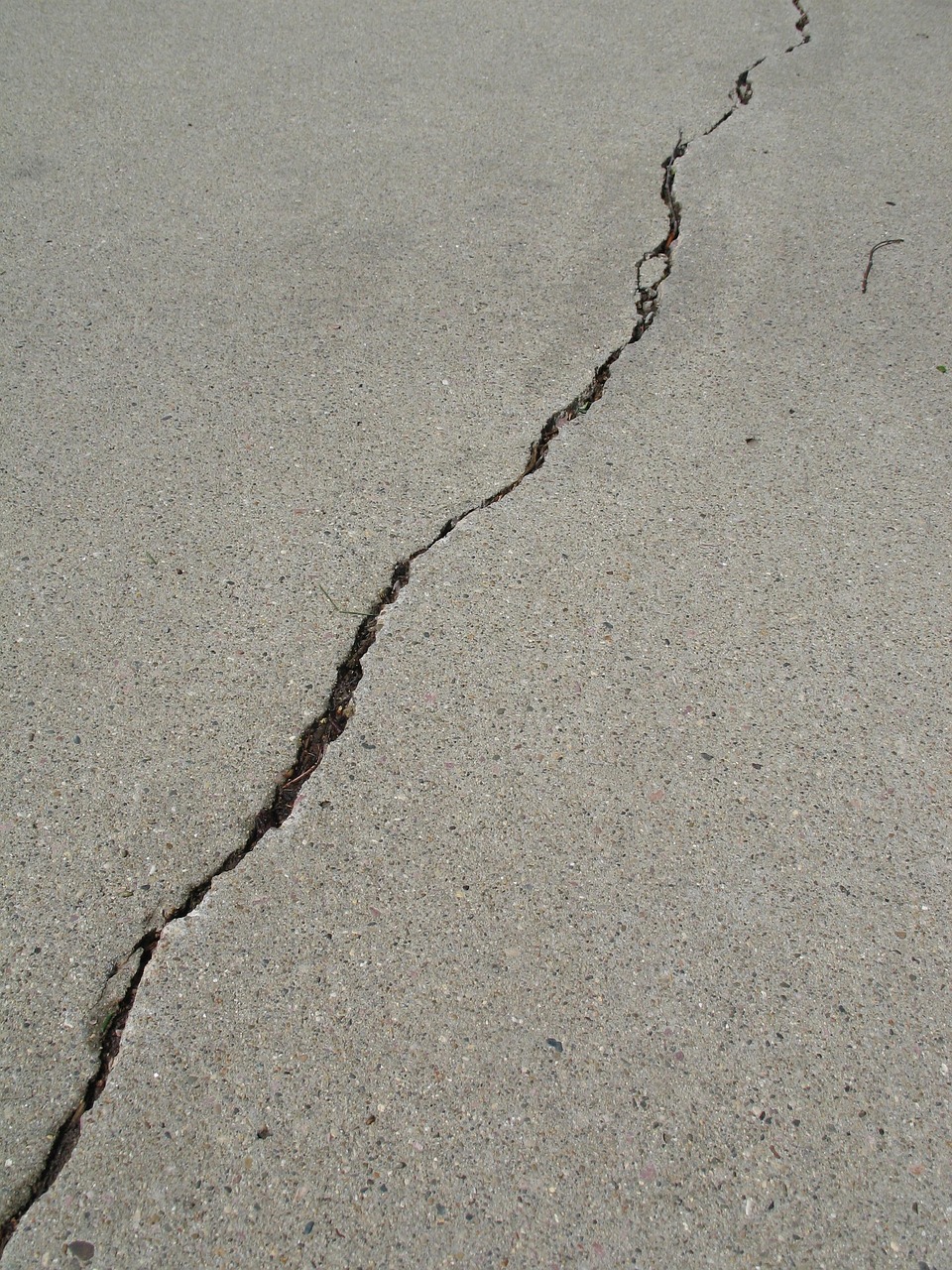
Lateral soil washout and freeze-thaw voids cause concrete slabs to flex and snap along the primary shear plane under dynamic surface loads.
The Science of Slab Leveling Fall River Properties Require
Traditional concrete repair methods like mudjacking are obsolete, especially in our local clay environment. Mudjacking involves pumping a heavy slurry of sand, water, and cement under a sunken slab. If the Bristol County clay under your driveway has already failed and compressed under the weight of a standard 4-inch concrete slab, injecting hundreds of pounds of heavy cement slurry directly onto that exact same failing soil guarantees the slab will just sink again. You are simply adding massive overburden to a weak subgrade.
Our operation utilizes advanced, structural-grade polyurethane foam injection. This high-density polymer is engineered for heavy-duty lifting and permanent subgrade stabilization. We use specific PCF (pounds per cubic foot) density foams that react violently and efficiently beneath the slab. Unlike heavy mudjacking slurry, structural polyurethane weighs roughly 2 to 4 pounds per cubic foot while delivering exceptional compressive strength—often exceeding 60 to 100 PSI, which is more than enough to support heavy commercial vehicles, RVs, and high-traffic loads.
Furthermore, our polyurethane material is 100% hydrophobic. It cures rapidly in the presence of water and will not break down, wash out, or degrade when the next heavy storm hits the South Coast. It physically repels moisture, driving standing water out of the sub-base voids while aggressively compacting the surrounding loose clay into a hardened, stabilized foundation.
Our Technical Inspection and Injection Workflow
We execute a strict, step-by-step mechanical process to ensure permanent stabilization. We do not guess; we measure, drill, inject, and verify.
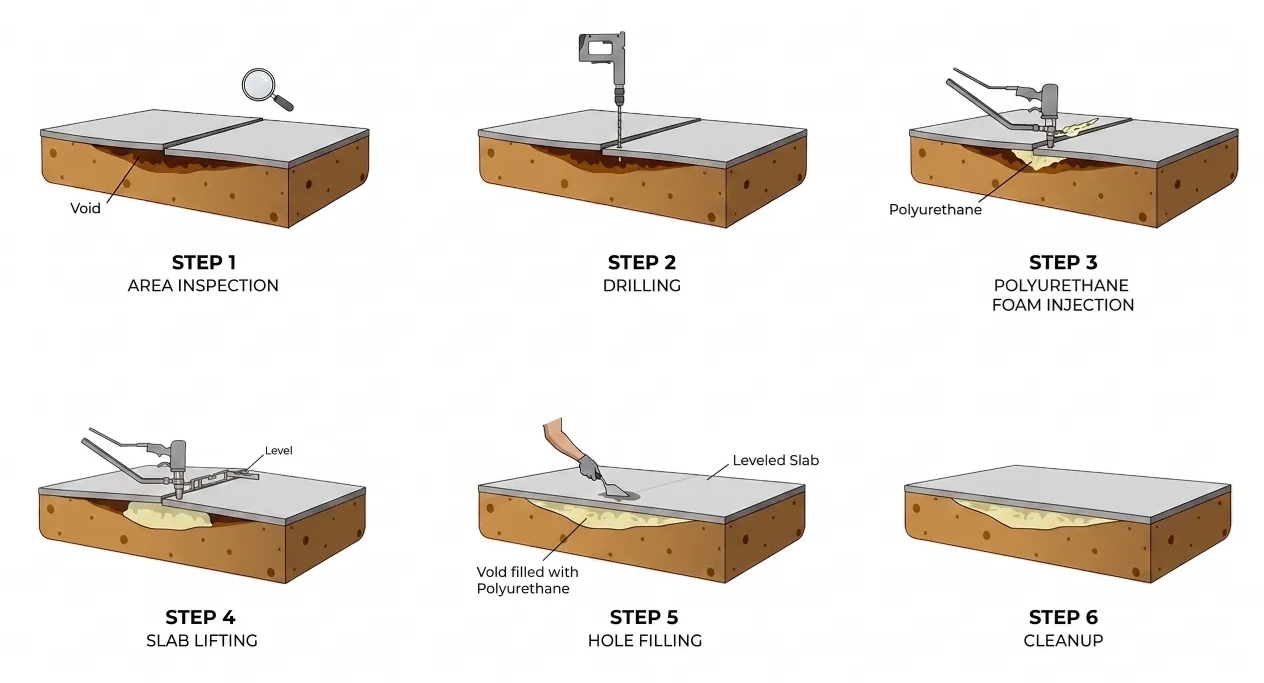
6-Step Polyjacking Method: Diagnostic inspection, precision port drilling, polyurethane injection, controlled hydraulic lift, port sealing, and same-day cleanup.
Subgrade Assessment & Void Mapping
Before we drill, we map the sunken concrete to identify the exact footprint and depth of the sub-surface void. We assess the slab's pitch using laser transit levels, identifying areas where negative drainage is pulling surface water directly toward your home's foundation. We also inspect control joints and existing stress fractures to plan the optimal injection grid.
Precision Port Drilling
Traditional mudjacking requires invasive, two-inch holes drilled across your slab, which severely weakens the concrete's structural integrity and leaves ugly, highly visible patches. Our system is surgically precise. We drill strategically placed 5/8-inch injection ports directly through the sunken slab. These holes are barely larger than a penny, preserving the strength of the concrete while providing deep access to the failed subgrade below.
Dual-Component Polymer Injection
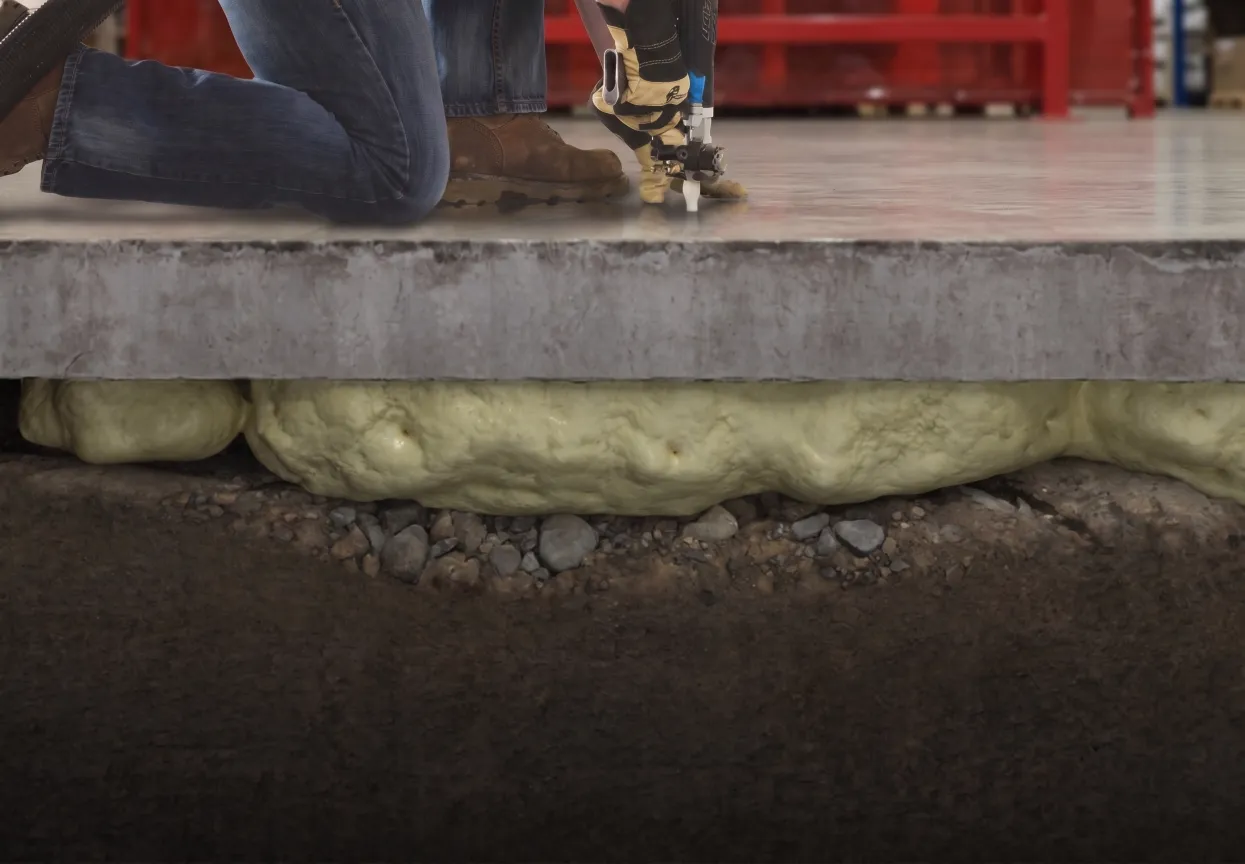
We pump a two-part, closed-cell polyurethane liquid through the injection ports. The moment the two chemical components mix beneath the slab, an exothermic reaction occurs. The polymer expands rapidly, seeking the path of least resistance. It forces its way into every micro-fissure of the soil, completely filling the void space, driving out trapped moisture, and heavily compacting the loose Fall River clay beneath.
Hydro-Demographic Lifting
Once the voids are entirely packed and the soil is consolidated, the expanding foam's chemical reaction exerts immense upward mechanical force—capable of lifting thousands of pounds per square foot. We carefully monitor the lift in real-time, injecting in short, controlled bursts to bring the slab back to its original engineered grade within fractions of an inch.
Port Sealing and Immediate Load Testing
Structural polyurethane achieves 90% of its ultimate compression strength within 15 minutes of injection. As soon as the slab is perfectly level, we clean the ports and seal the 5/8-inch holes with a high-strength, non-shrink cementitious grout that blends seamlessly with the existing concrete. There is no downtime. You can park your heavy-duty truck on the driveway or walk on the patio immediately after we pack up our equipment.
Concrete Leveling Applications in Fall River
If you have a concrete surface on your property, it is susceptible to soil failure. We provide precision concrete leveling Fall River MA homeowners and commercial facility managers rely on for all hardscape profiles:
Driveway Leveling:
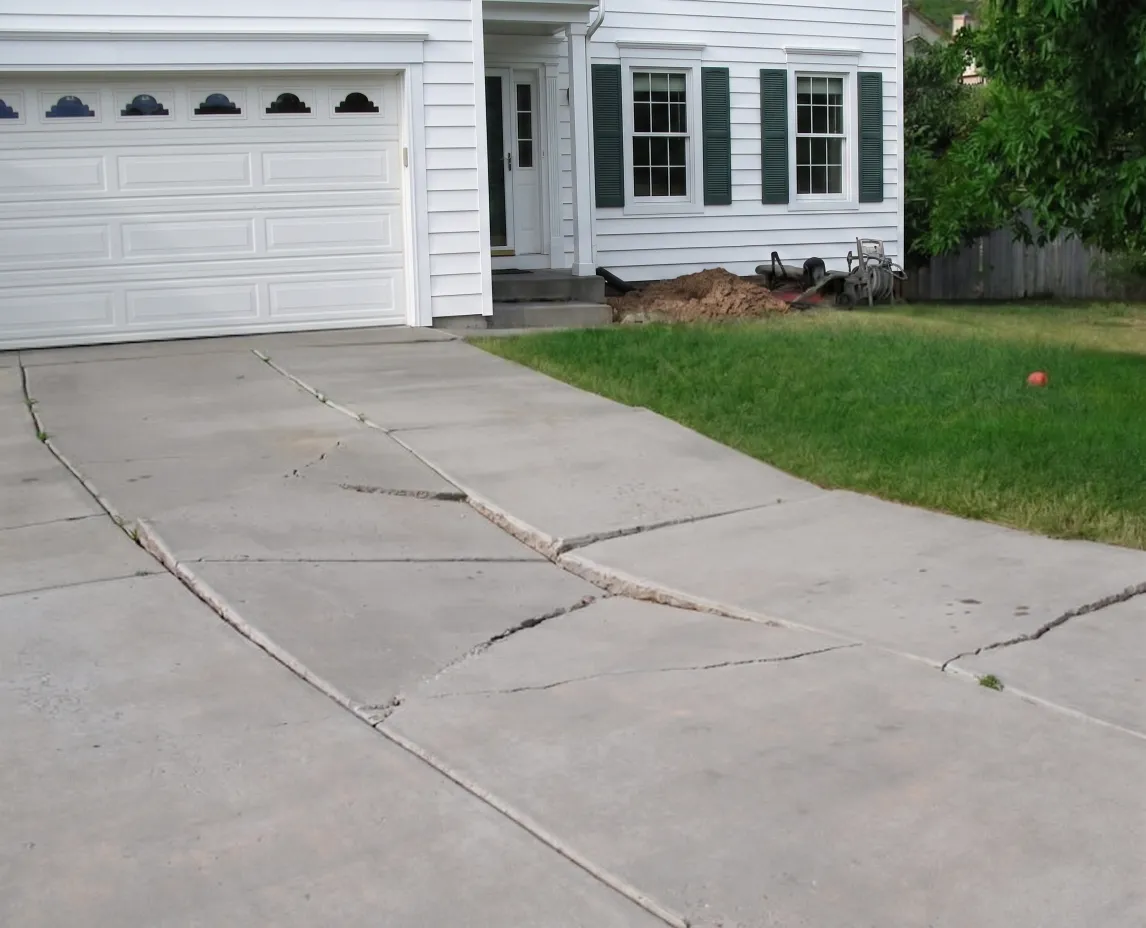
Stop punishing your vehicle's suspension on sharp, sunken driveway lips. We raise settled driveway panels back flush with your garage floor, eliminating trip hazards and preventing water from pooling against your foundation.
Sidewalk and Walkway Repair:
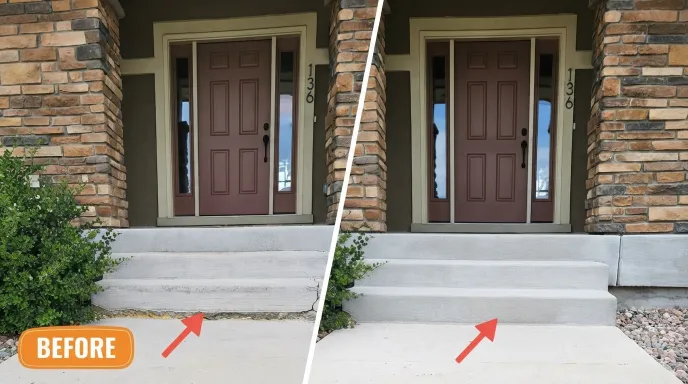
Uneven municipal or residential sidewalks are massive liability risks. A trip and fall injury on your property can trigger devastating insurance claims. We level individual walkway blocks and steps to restore safe pedestrian transit.
Patio and Pool Deck Stabilization:
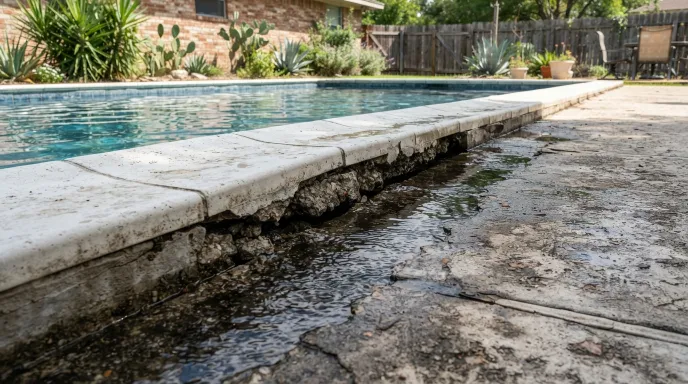
Sinking concrete around your pool can damage the underlying plumbing and skimmer lines. We carefully lift stamped and standard concrete pool decks, restoring the proper pitch so water drains away from the pool structure.
Garage and Shop Floor Lifting:
Hollow voids under a garage floor will eventually cause the slab to crack directly down the middle under the weight of parked cars. We stabilize the entire sub-base, ensuring the slab is fully supported.
Commercial and Industrial Applications:
From warehouse floors handling heavy forklift traffic near Route 24 to loading docks and factory hardscapes, we inject high-density foams engineered to withstand extreme dynamic loads.
Stop letting New England weather and unstable clay dictate the condition of your property's hardscapes. Leveling your concrete is vastly faster, significantly cleaner, and up to 70% cheaper than traditional demolition and replacement.
Frequently Asked Questions About Concrete Leveling in Fall River
Common questions about polyurethane foam injection, slab raising costs, and local Bristol County ground conditions.
Is polyurethane injection better than mudjacking?
Yes, significantly. Mudjacking relies on a heavy cement and sand slurry weighing up to 100–120 lbs per cubic foot, adding extreme overburden onto already weak Bristol County clay and leading to re-settling. High-density polyurethane foam weighs only 2–4 lbs per cubic foot, expands aggressively to compact sub-base voids, is 100% waterproof (hydrophobic), and requires tiny 5/8-inch penny-sized drill holes rather than large 2-inch mudjacking holes.
How long does concrete leveling take?
Most residential concrete leveling projects in Fall River—such as front walkways, 2-car driveways, or pool patios—are completed within 1 to 3 hours. Unlike freshly poured concrete that takes 28 days to fully cure and days before you can step on it, polyurethane foam reaches 90% compressive strength in just 15 minutes. You can walk and drive on your leveled slabs immediately after work finishes.
How much does concrete leveling save compared to full replacement?
Polyurethane concrete leveling typically saves homeowners between 50% and 70% compared to the price of tearing out and repouring a new slab. Furthermore, leveling avoids the heavy machinery damage to your lawn and landscaping, eliminates expensive permit delays, and prevents color mismatch with adjacent mature concrete slabs.
Why do concrete slabs sink so frequently in Fall River and Bristol County?
Our local Bristol County soil contains high amounts of clay that swell with seasonal rains and marine humidity from Mount Hope Bay, then shrink during dry spells. Combined with over 100 annual freeze-thaw cycles and frost heave, subterranean channels wash away fine soil particles beneath slabs. Without uniform subgrade support, slabs crack and drop under vehicle or foot traffic. Polyurethane fills those voids and stabilizes the underlying base permanently.
Fall River Concrete Leveling & Polyjacking
Serving Somerset, Swansea, Freetown, Westport, Dartmouth, and Fall River. Save up to 70% over concrete replacement.