
Sidewalk & Walkway Leveling in Fall River, MA
Fix Trip Hazards
Submit sidewalk and step details for rapid commercial or residential repair.
Trip Hazards & ADA Liability in Dense Multi-Family Districts
An uneven sidewalk is a massive financial liability waiting to happen. In high-density multi-family districts like Flint Village, foot traffic is constant. When the concrete slabs outside your apartment complex or triple-decker settle, they create a sharp, jagged lip. That two-inch drop is a direct trip hazard.
ADA Compliance Enforcement
If a pedestrian catches their boot on an uneven edge, property owners are fully liable for medical costs and legal claims. ADA regulations mandate smooth, level transitions across all public and private walkways.
Up in the historic Highlands neighborhood, the issue expands beyond standard sidewalks to include heavy structural staircases. Uneven concrete step repair is incredibly complex because you are dealing with significant grade changes and heavy masonry loads. As the soil washes out down the slope, the heavy stone and concrete steps drop, tilt, and pull away from the main walkway. We deploy closed-cell structural polyurethane foam to pack the subterranean voids, lock the subgrade down, and lift the heavy concrete perfectly back into alignment.
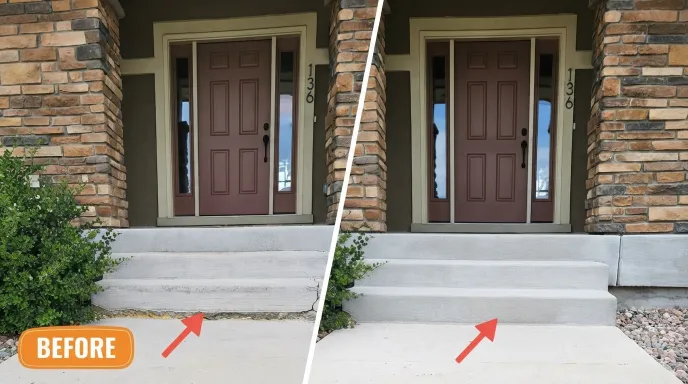
The Geotechnical Failure of Walkway Subgrades
Concrete walkways fail because the soil beneath them is compromised. Heavy coastal rain runoff dumps off roofs, funnels out of poorly positioned downspouts, and washes directly under sidewalk slabs, scouring fine particulates into the water table.
Winter accelerates this: water pooling in voids freezes and expands, violently heaving concrete upward, followed by a deeper drop during the spring thaw. This cyclic stress cracks panels and shatters joints.

100 lbs/cu ft cement slurry forces immense weight onto weak soil, prompting repeat settlement within a few seasons.
Only 2-3 lbs/cu ft with powerful compressive strength that permanently stabilizes the dirt without added dead weight.
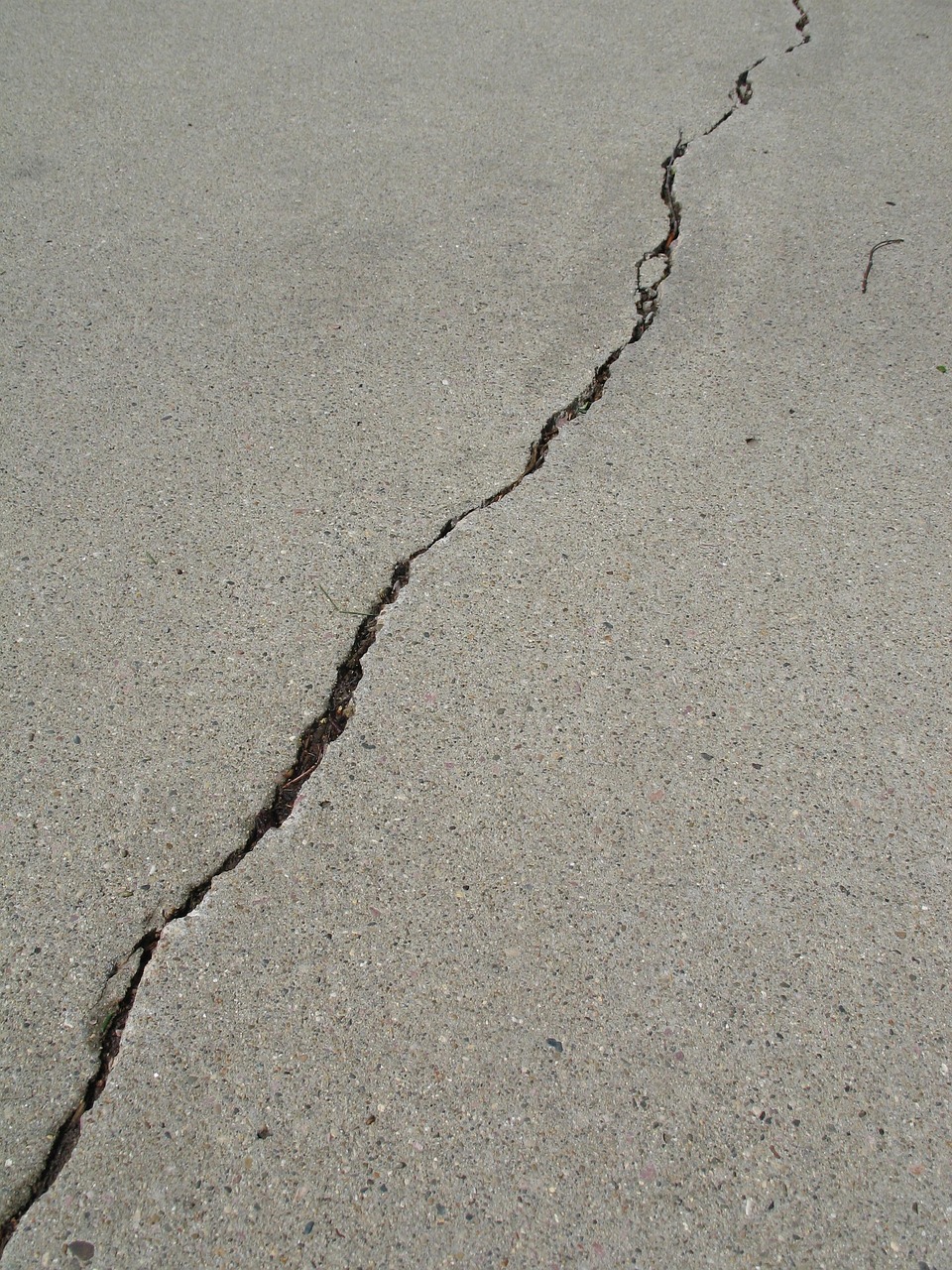
ADA Trip Hazard & Slab Offset
Uneven settling creates sudden vertical offsets and stress cracks along walkway control joints. Polyurethane foam injection raises dropped panels flush to eliminate municipal liability without destroying existing flagstones.
Subgrade Soil Mapping & Non-Destructive Ports
Professional sidewalk lifting requires exact void mapping and minimal surface scarring:
DCP Penetrometer Testing
We map soil compaction to determine whether voids are surface washouts or loose fill down 3 feet.
Discreet 5/8-Inch Penny-Sized Ports
We drill penny-sized ports on calculated load grids, avoiding the 2-inch scarring of mudjacking.
High-Pressure Expanding Packers
Rubber mechanical sleeves lock tight in concrete to contain 1,500 PSI delivery with zero surface blowout.
Plural-Component Processing & Quality Safeguards
The proportioner machine pressurizes A-side isocyanate and B-side polyol resin, heating both lines to 120-130°F. The chemical shoots into the mechanical packer, expanding up to 20 times in volume to pack voids solid.
We monitor lift with digital laser levels in 1/8-inch increments. If proportioner pressure deviates by 200 PSI, the job halts to clear filters and protect chemical ratio integrity. We also saw-cut bound expansion joints to prevent binding fractures before applying upward lift.
Hydrophobic Curing & 15-Minute Reopening
Our closed-cell polyurethane foam is hydrophobic and cures in active groundwater without washing out or degrading over time.
Unlike mudjacking that requires roping off walkways for 24-48 hours, our foam reaches 90% structural strength in 15 minutes. We remove packers, patch ports with color-matched cement, and immediately reopen the walkway to full pedestrian traffic.
Restore ADA Compliance Fast
15-minute cure times for commercial walkways, municipal paths & residential steps.